Can You Blend Hot Soup in a Blender? How to Do It Safely
Why hot liquids can blow the lid off, which blenders can handle heat, and the safest way to purée soup
As an Amazon Associate I earn from qualifying purchases. If you buy through links on this page, we may earn a small commission at no extra cost to you. Details.
A velvety puréed soup is one of the best things a blender can make. Butternut squash, tomato, potato and leek, broccoli cheddar: they all start chunky in the pot and finish silky smooth in the blender.
There’s one problem. Hot liquid in a sealed blender can be genuinely dangerous. If you’ve ever seen a blender lid pop off and splatter the ceiling with soup, you know how fast it happens. Worse, it can cause serious burns.
The good news is that blending hot soup is safe when you understand why it goes wrong and follow a few simple rules. This guide explains the science, which blenders are safe for hot liquids, and three safe methods, from the easiest to the smoothest.
Most important rule: Only blend hot liquids in a blender that your manual says is suitable for hot ingredients, and follow its instructions exactly. Never blend hot liquids in a personal (bullet-style) blender with a sealed cup unless the manufacturer specifically says you can.
Why hot soup can blow the lid off
When you blend hot liquid, three things happen at once:
- Steam builds up. Hot soup is constantly releasing steam. In a sealed jar, that steam has nowhere to go.
- Blending adds air and heat. The spinning blades whip air into the liquid and push it upward. The air inside the jar heats up and expands.
- The pressure pushes upward. The combined steam and expanding air push against the lid. When the pressure is stronger than the lid’s grip, the lid pops off and hot soup sprays out.
The effect is strongest when the jar is very full (less space for the air and steam), the soup is very hot, and you start on high speed (a sudden surge of movement and air).
In personal blenders, the problem is even more serious. The cup is screwed shut with no vent, so pressure can build with no escape, and the cup can burst or spray hot liquid when it’s unscrewed.
Which blenders can safely blend hot liquids?
| Blender type | Hot liquids? | Notes |
|---|---|---|
| Immersion (stick) blender | Yes, the safest option | Blends directly in the pot, with no sealed container |
| High-performance (e.g. Vitamix, Blendtec) | Usually yes | Many are designed for hot liquids and can even heat soup through friction. Follow the manual |
| Full-size conventional | Often yes, with care | Check the manual. Some restrict hot liquids or specify a max fill level |
| Personal / bullet | Usually no | Sealed cups can build dangerous pressure. Many manuals forbid hot ingredients |
| Plastic jars not rated for heat | Check | Very hot liquids can warp or crack some plastics |
You can usually find your manual on the manufacturer’s website, for example Vitamix, Ninja or NutriBullet.
Not sure which type you have? See our guide to personal, full-size and high-performance blenders.
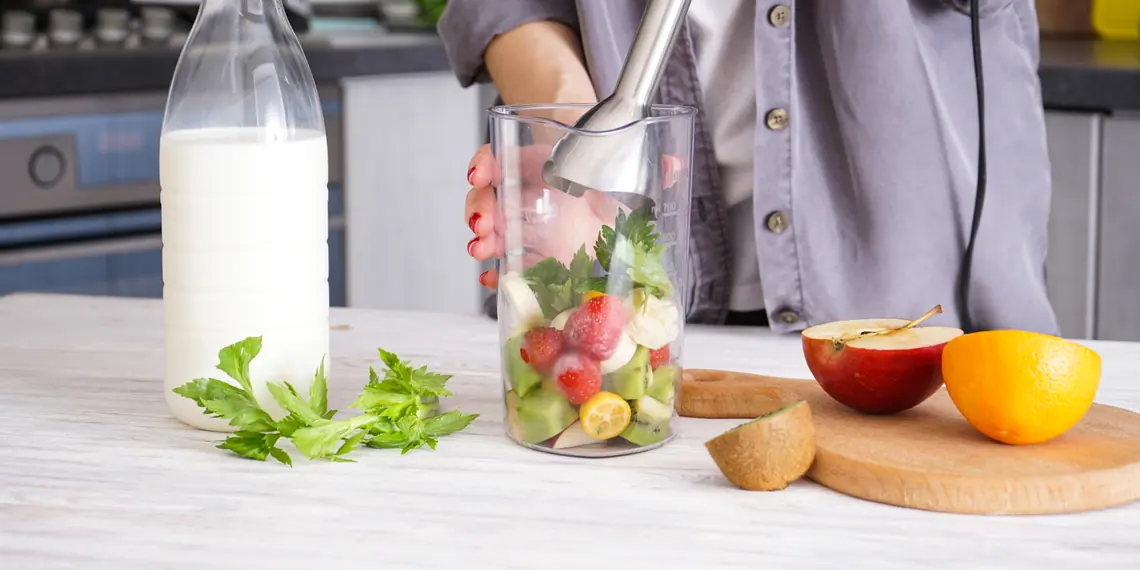
Method 1: The immersion blender (safest and easiest)
If you make puréed soups regularly, an immersion blender is the best tool for the job. There’s no sealed container, so there’s no pressure build-up, and no ladling hot soup into a jar.
How to do it:
- Take the pot off the heat. Let it stop bubbling first.
- Use a deep pot so there’s plenty of room above the soup to prevent splashing.
- Put the blender head fully into the soup before switching on. Starting it above the surface will spray soup everywhere.
- Tilt the pot slightly if the soup is shallow, so the blade stays submerged.
- Move the blender slowly up and down and around the pot until smooth.
- Switch off before lifting it out.
Pros: Safest method, less washing up, no transferring hot soup. Cons: Results are slightly less silky than a powerful countertop blender. Fibrous soups may keep a little texture.
Method 2: A countertop blender, the safe way
If you want the smoothest possible texture, a countertop blender does it best. Follow these steps every time.
Step-by-step
- Check your manual. Make sure your blender and jar are rated for hot liquids, and note any maximum fill level for hot ingredients.
- Let the soup cool for a few minutes. Take it off the heat and let it stop steaming heavily. Very hot, just-boiled soup produces the most steam. Letting it cool a little makes a big difference.
- Fill the jar no more than about halfway, or to the hot-liquid limit in your manual if it’s lower. Many sources recommend one-third to one-half full for hot liquids. Blend in batches.
- Secure the lid, and let steam escape safely. Follow your manual here:
- Some blenders recommend removing the small center cap (lid plug) and covering the opening with a folded kitchen towel, which lets steam escape without splatter.
- Some high-performance blenders are designed to be used with the lid plug in place and have their own venting. Follow what your manual says.
- Hold the lid down with a folded towel over it, keeping your hand away from the opening.
- Start on the lowest speed. Let it run for a few seconds to release the initial pressure.
- Increase the speed gradually to high and blend until smooth.
- Turn off and wait a moment before removing the lid, and open it away from your face.
- Pour into a clean pot and repeat with the next batch.
Never: fill the jar to the top with hot soup, start on high speed, or stand with your face over the jar when removing the lid.
Method 3: Heating soup in a high-performance blender
Some high-performance blenders can heat soup from cold using friction. The blades spin so fast that the friction warms the liquid over several minutes. It’s a handy trick for quick vegetable soups.
If your blender supports this (check your manual; many include a “soup” program), the basic idea is:
- Add your ingredients (usually cooked or soft vegetables plus liquid) to the jar, within the fill limit.
- Secure the lid with the lid plug in place, as the manual directs.
- Start low and increase to the highest speed, or use the soup program.
- Blend for the time your manual recommends until it’s steaming hot.
Only do this if your manual specifically says your blender can heat soup. Running a conventional blender for that long can overheat the motor. If you smell something hot, stop. See why a blender smells like burning.
Tips for the silkiest puréed soup
- Cook the vegetables until very soft. Undercooked vegetables leave a grainy texture no blender can fix.
- Blend longer than you think. A high-performance blender may need a minute or more for truly silky soup.
- Add liquid gradually. Blend with less liquid first for a smoother purée, then thin to the consistency you want.
- Strain for restaurant-smooth soup. For extra silkiness, push the soup through a fine-mesh strainer.
- Add dairy at the end. Stir in cream, milk or cheese after blending, off the heat, to avoid splitting.
- Season after blending. Blending can change how salty or thick soup tastes, so adjust at the end.
Let it cool a little, fill it halfway, start slow. Those three habits prevent almost every hot soup accident.
Storing and reheating blended soup safely
Puréed soup is great for meal prep, but cool and store it properly:
- Cool it quickly. Divide large batches into shallow containers so they cool faster, and refrigerate promptly. Food safety guidance generally recommends refrigerating cooked food within two hours. See FoodSafety.gov’s guidance on storing food safely and the USDA Food Safety and Inspection Service for details.
- Don’t blend and then leave it out. Blended soup stays warm for a long time in a big pot.
- Reheat until steaming hot all the way through before serving.
- Freeze in portions. Leave room at the top of containers because liquids expand as they freeze.
Cleaning up after soup
Hot, starchy soups can leave a film in the jar. Clean it right away using the quick self-clean method: warm (not boiling) water, a drop of dish soap, and a short blend. Our 60-second blender cleaning guide walks through it step by step, including how to deal with lingering smells from garlic and onion.
If you notice soup around the base of the jar after blending, check the gasket and collar. Hot liquid and pressure can find weak seals. See how to fix a blender leaking from the bottom.
Frequently asked questions
Is it safe to put hot soup in a blender?
It can be, if your blender is rated for hot liquids. Let the soup cool for a few minutes, fill the jar no more than about halfway, vent steam as your manual directs, hold the lid down with a towel, and start on the lowest speed. An immersion blender is the safest option.
Why did my blender lid pop off with hot soup?
Steam and air heated by the blending expand and push against the lid. This is worst when the jar is very full, the soup is very hot, and you start on high speed. Filling less, cooling the soup slightly and starting slow prevent it.
Can I blend hot soup in a NutriBullet or personal blender?
Generally no. Personal blenders use sealed cups with no way for steam to escape, so pressure can build dangerously. Many manufacturers explicitly warn against blending hot ingredients. Let the soup cool completely first, or use an immersion blender.
How long should soup cool before blending?
A few minutes off the heat, until it’s no longer boiling or steaming heavily, makes a big difference. Always check your blender’s manual for its specific guidance on hot liquids.
Can a blender heat up soup?
Some high-performance blenders can heat soup through blade friction, often with a dedicated soup program. Conventional blenders aren’t designed for this and may overheat if run that long. Check your manual first.
The bottom line
Blending hot soup isn’t dangerous when you respect the steam. Use an immersion blender for the easiest and safest option. If you want the silkiest results from a countertop blender, check that it’s rated for hot liquids, let the soup cool a little, fill it halfway, vent steam as your manual directs, and always start on low.
Want more from your blender? Learn the right order to add ingredients for smoother results, or find out which type of blender suits your kitchen.

We research blenders so you don't have to: we compare specs, warranties and thousands of owner reviews, and write practical guides for getting more out of the blender you already have.