What Is an Immersion Blender Used For? Uses, Tips and Buying Guide
12 things a stick blender does brilliantly, what it can't do, and what to look for when you buy
As an Amazon Associate I earn from qualifying purchases. If you buy through links on this page, we may earn a small commission at no extra cost to you. Details.
An immersion blender, also called a stick blender or hand blender, is one of the most useful and underrated tools in the kitchen. It’s small enough to live in a drawer, cleans up in seconds, and blends food right where it is: in the pot, the bowl, the jug or the cup.
For many kitchens, it’s the perfect companion to a countertop blender, and for small kitchens it can even replace one for many jobs.
This guide covers what an immersion blender is used for, what it can’t do, how to use it without splattering, and what to look for when you buy one.
How we researched this: This guide is based on how immersion blenders are designed, manufacturer specifications and long-term owner feedback. Always check your model’s manual for safe use, attachments and cleaning.
What is an immersion blender?
An immersion blender is a handheld motor with a long shaft and a small, guarded blade at the end. Instead of pouring food into a jar, you put the blender into the food. Many models come with attachments like a whisk, a chopper bowl or a blending beaker.
12 things an immersion blender is great for
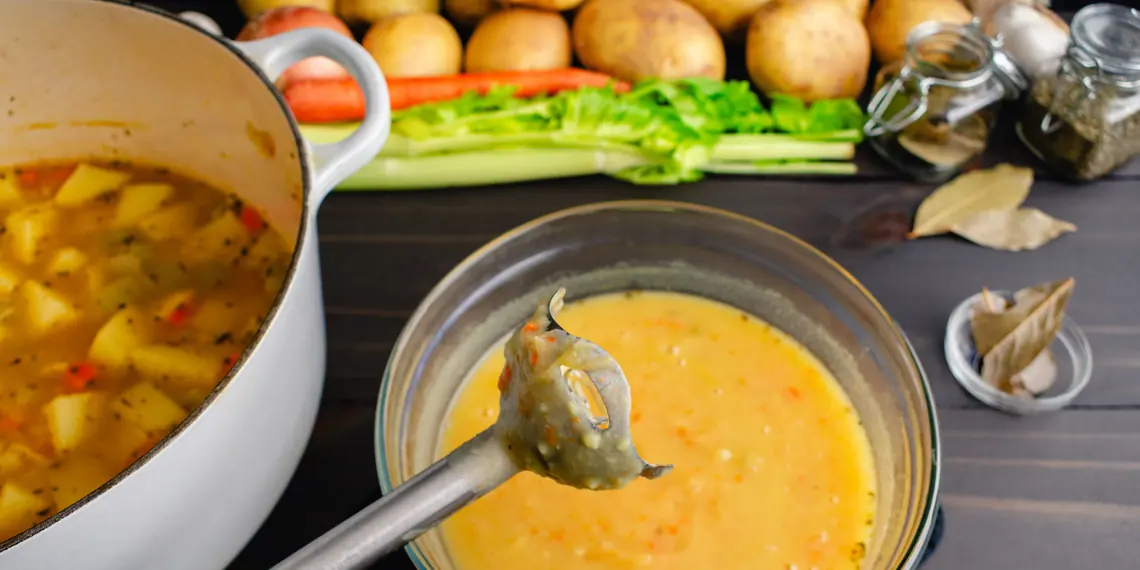
- Puréeing soup in the pot. The number-one reason to own one. No transferring hot soup to a jar. See how to blend hot soup safely.
- Smooth sauces: tomato sauce, gravy, cheese sauce.
- Mayonnaise and aioli, made in a tall cup in under a minute.
- Salad dressings and vinaigrettes that stay emulsified.
- Whipped cream (with the whisk attachment, or carefully with the blade).
- Single smoothies and protein shakes, blended in the cup you’ll drink from. (Best with soft or thawed fruit.)
- Baby food purées in small batches. See homemade baby food in a blender.
- Pancake and crêpe batter without lumps. See blender pancake batter.
- Mashed-potato-style purées of cauliflower, squash or root vegetables. (Go easy on potatoes, since over-blending makes them gluey.)
- Pesto and herb sauces with the chopper attachment.
- Frothing milk for coffee drinks.
- Smoothing lumpy sauces or custards in the pan.
What an immersion blender can’t do well
- Crush ice or blend lots of frozen fruit. Most aren’t designed for it. See crushing ice in a blender.
- Thick smoothie bowls, nut butters or frozen desserts. These need a powerful countertop blender or food processor.
- Very silky results with fibrous ingredients like kale stems and whole nuts. A high-performance blender does better.
- Large dry jobs, like grinding grains.
That’s why many kitchens have both: an immersion blender for soups, sauces and small jobs, and a countertop blender for smoothies and frozen drinks. Our guide to blender types compares them.
Immersion blender vs. countertop blender
| Immersion blender | Countertop blender | |
|---|---|---|
| Best for | Soups in the pot, sauces, dressings, small batches | Smoothies, frozen drinks, big batches, thick blends |
| Hot liquids | Easiest and safest: blend right in the pot | Possible if rated for heat, with care |
| Ice and frozen fruit | Usually not suitable | Yes (varies by model) |
| Texture | Smooth, slightly less silky | Silkier, especially high-performance models |
| Cleanup | Rinse the shaft in seconds | Jar, lid and blade to wash |
| Storage | Fits in a drawer | Takes counter or cupboard space |
| Price | Usually lower | Wide range, up to premium |
Which should you buy first? If you mostly make soups, sauces and single shakes, start with an immersion blender. If you mostly make smoothies and frozen drinks, start with a countertop blender. Many people end up with both because they complement each other so well.
Common mistakes with immersion blenders
- Starting it above the surface, which sends soup flying. Always submerge first.
- Using a shallow bowl. Use a tall cup or deep pot instead.
- Blending mashed potatoes too long. Over-blending potatoes releases starch and makes them gluey. Use a masher or blend very briefly.
- Pressing the guard flat against the pot bottom, which creates suction. Tilt it slightly and keep it moving.
- Running it continuously for minutes. Blend in short bursts and let the motor rest on long jobs, following your manual.
How to use an immersion blender without splattering
- Use a deep, narrow container. Tall cups and deep pots keep splashes inside.
- Submerge the blade guard fully before switching on. Starting it above the surface sprays food everywhere.
- Take hot pots off the heat and let the contents stop bubbling.
- Tilt the pot slightly if the liquid is shallow, so the blade stays covered.
- Move slowly up and down and around the container.
- Switch off before lifting the blender out.
Safety tips
- Unplug it before touching the blade or changing attachments.
- Never put your fingers near the blade guard while it’s plugged in.
- Don’t use it in non-stick pans unless the manual says it’s safe. The blade guard can scratch the coating.
- Don’t submerge the motor body in water or food. Only the shaft goes in.
- Keep cords away from hot burners.
If you make soup, sauces or single smoothies, an immersion blender will likely get more use than any other appliance in your kitchen.
What to look for when buying an immersion blender
| Feature | Why it matters |
|---|---|
| Stainless steel shaft | Handles hot soups and resists stains and smells better than plastic shafts |
| Detachable shaft | Easier to clean, and often dishwasher-safe (check the manual) |
| Variable speed or turbo | More control for delicate sauces vs. tougher jobs |
| Comfortable grip and button | You’ll hold it for a minute or more; an easy button reduces hand fatigue |
| Blade guard design | Guards that reduce suction to the pot bottom are easier to move around |
| Attachments | Whisk, chopper and beaker add versatility, if you’ll use them |
| Corded vs. cordless | Cordless is convenient; corded doesn’t run out of battery mid-soup |
| Warranty | A sign of how long the manufacturer expects the motor to last |
Well-known immersion blender makers include Breville, KitchenAid and Cuisinart. Check each model’s specifications and warranty.
How to clean an immersion blender
- Blend warm, soapy water in a tall cup for 10–20 seconds.
- Unplug it, then detach the shaft.
- Rinse the shaft and let it dry upright or blade-up.
- Wipe the motor body with a damp cloth. Never submerge it.
- Check the manual before putting the shaft in the dishwasher.
For countertop blender cleaning, see our 60-second cleaning guide.
Frequently asked questions
What is an immersion blender best used for?
Puréeing soup directly in the pot is the top use. It’s also great for sauces, mayonnaise, dressings, single smoothies, whipped cream, baby food and lump-free batters.
Can an immersion blender replace a regular blender?
For soups, sauces and small jobs, often yes. But it can’t crush ice or make thick smoothie bowls, nut butters or frozen desserts, so many people keep both.
Can you use an immersion blender in a hot pot?
Yes, that’s one of its main uses. Take the pot off the heat, let it stop bubbling, keep the blade fully submerged, and don’t use it in non-stick pans unless the manual says it’s safe.
Can an immersion blender crush ice?
Most can’t. They’re not designed for ice or large amounts of frozen fruit. Use a countertop blender for frozen drinks.
How do I stop my immersion blender from splattering?
Use a deep, narrow container, submerge the blade before turning it on, move it slowly, and switch it off before lifting it out.
The bottom line
An immersion blender is the easiest way to purée soups and sauces, whip up dressings and mayo, and blend single servings, all with minimal cleanup. It isn’t built for ice or thick frozen blends, so pair it with a countertop blender if you make those often.
Choosing between appliances? See blender vs. food processor.

We research blenders so you don't have to: we compare specs, warranties and thousands of owner reviews, and write practical guides for getting more out of the blender you already have.