The Right Order to Add Smoothie Ingredients (It Really Matters)
Liquids first, ice last: why loading order matters
As an Amazon Associate I earn from qualifying purchases. If you buy through links on this page, we may earn a small commission at no extra cost to you. Details.
If your blender keeps stalling, spinning uselessly under an air pocket, or leaving chunks of frozen fruit, the problem often isn’t the blender. It’s the order you’re loading it in. (If fixing the order doesn’t help, work through our blender not blending checklist.)
The order for a standard countertop blender
Load from bottom to top:
- Liquids. Milk, juice, water, yogurt. This lets the blades get moving and start a vortex.
- Powders and small add-ins. Protein powder, cocoa, seeds, nut butter. Putting them near the liquid stops them from sticking to the walls.
- Leafy greens. Spinach and kale break down best close to the liquid. (New to greens? Here’s how to make a green smoothie that doesn’t taste like grass.)
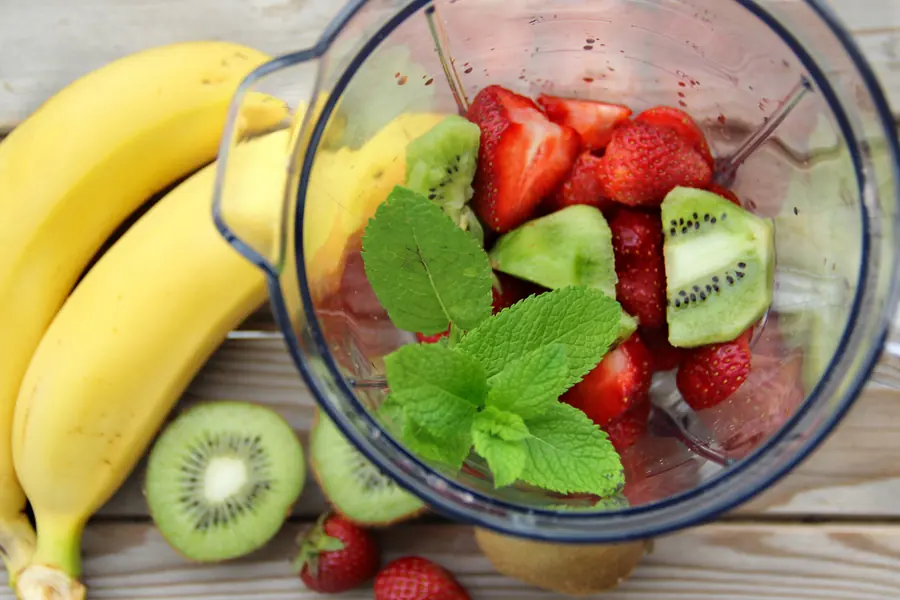
- Soft fruit. Bananas, berries, mango, avocado. (No bananas? These smoothies without banana are still creamy.)
- Frozen fruit and ice, last. Their weight pushes everything else down into the blades.
Why it works: blades sit at the bottom. When liquid is down there, the blender forms a vortex that pulls the heavy frozen things down into the blades. Put ice at the bottom and the blade just carves a hole in it and spins in the air.
The exception: personal “bullet” blenders
With personal blenders you fill the cup, screw on the blade, then flip it upside down. Whatever you added last ends up nearest the blade. Many personal blender makers therefore suggest a different order. Check your model’s manual, and don’t fill past the max line.
More tips for smoother smoothies
- Start low, then go high. Beginning at low speed helps the ingredients settle into the blades before you crank it up.
- Too thick? Add liquid a tablespoon or two at a time. It’s easy to overshoot and end up with juice.
- Use the tamper if you have one. High-performance blenders often come with a tamper for pushing ingredients down while it runs. A tamper makes a thick smoothie bowl much easier. Never use a spoon or spatula while the blender is running.
- Freeze your own fruit. Peel and slice ripe bananas before freezing. Frozen banana makes a creamy smoothie without ice watering it down, and it’s the whole base of banana nice cream.
- Prep smoothie packs. Portion fruit, greens and seeds into freezer bags. In the morning, add liquid first, then dump the pack on top. Our guide to smoothie freezer packs shows how to prep a week at once.
Example: a berry smoothie, loaded in order
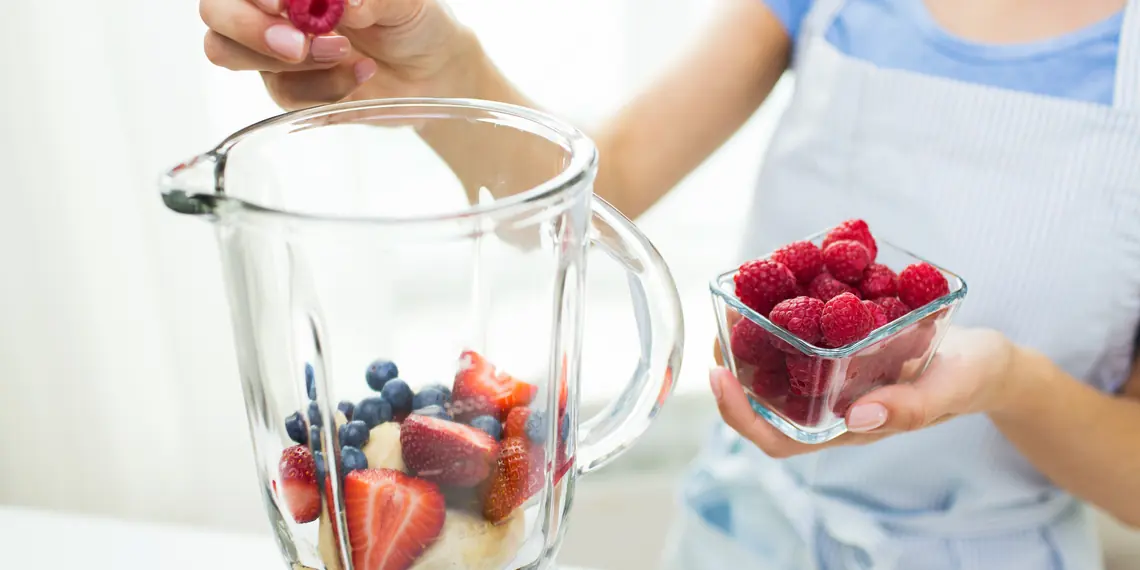
Here’s how a simple one-serving berry smoothie goes into a countertop blender, bottom to top:
- 1 cup (240 ml) milk (dairy or plant-based)
- 1 tablespoon chia seeds or a scoop of protein powder
- A handful of baby spinach
- 1 ripe banana, broken into chunks
- 1 cup frozen mixed berries
Start on low for a few seconds, then turn up to high for 30–60 seconds. If it stalls, stop, add a splash more milk and try again.
Common loading mistakes
- Ice or frozen fruit at the bottom. The blades carve a hole and spin in air. Put frozen things last.
- Too little liquid. Thick, frozen-heavy smoothies still need enough liquid to cover the blades. Add more a little at a time if it won’t move.
- Powders added last. Protein powder and cocoa dumped on top tend to cake on the lid and walls. Add them right after the liquid.
- Big frozen chunks. Large pieces of frozen fruit and big ice cubes are hard on the blades and motor. Cut fruit into smaller pieces before freezing.
- Filling past the max line. Overfilled jars leak at the lid and don’t form a proper vortex.
Cheat sheet
Liquid → powders → greens → soft fruit → frozen fruit/ice. Personal blender? Check the manual, because the cup gets flipped.
Frequently asked questions
Should ice go in first or last?
Last, in a standard countertop blender. Liquid at the bottom lets the blades build a vortex that pulls the heavy ice down. Ice at the bottom just gets a hole carved in it.
Does ingredient order matter in a high-performance blender?
It matters less, because powerful motors and tampers can force things through, but the same order still gives smoother results with less stopping and stirring.
What order should I use for a personal (bullet) blender?
Because the cup is flipped onto the base, the last ingredient ends up nearest the blade. Many personal-blender makers suggest a different order for that reason, so follow your model’s manual.
How much liquid should I use in a smoothie?
A good starting point is about 1 cup (240 ml) of liquid per serving. Use a little more when most of the fruit is frozen, and less for a thick, spoonable smoothie.
Why does my smoothie still have chunks?
Usually the order was off, there wasn’t enough liquid, or the frozen pieces were too big. Load liquid first and frozen fruit last, start on low, and add liquid a tablespoon at a time.
The bottom line
Load a countertop blender liquid first, then powders, greens, soft fruit and frozen fruit or ice last. Start low, go high, and add liquid gradually. For personal blenders, follow the manual, because the cup gets flipped.

We research blenders so you don't have to: we compare specs, warranties and thousands of owner reviews, and write practical guides for getting more out of the blender you already have.