How to Make a Thick Smoothie Bowl in a Blender (That Holds Its Toppings)
The ratio, the technique and 5 bowl recipes, plus how to fix a runny bowl
As an Amazon Associate I earn from qualifying purchases. If you buy through links on this page, we may earn a small commission at no extra cost to you. Details.
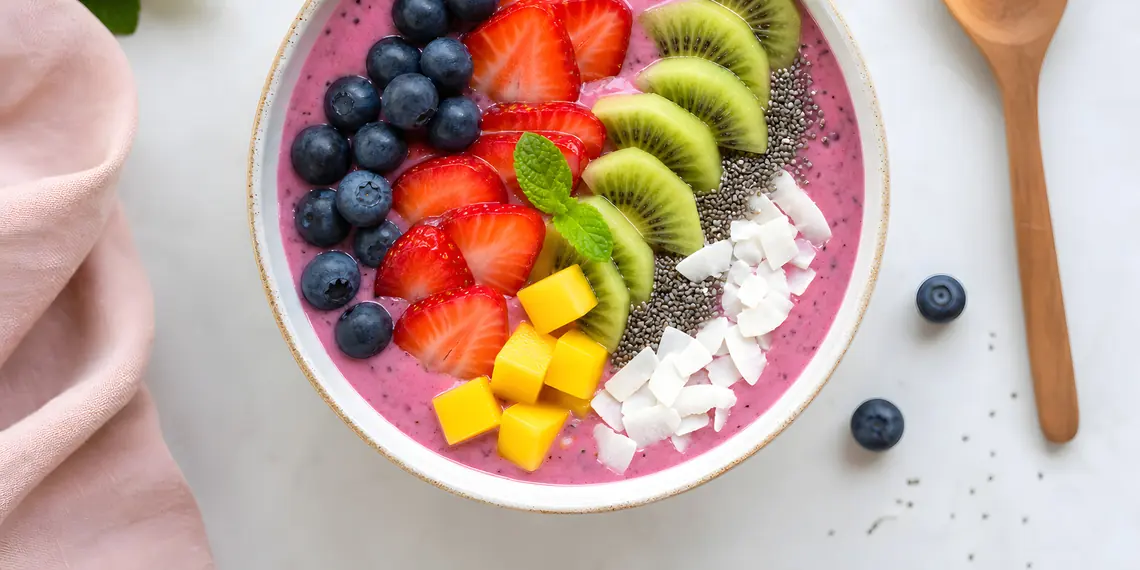
A great smoothie bowl is thick enough to eat with a spoon, cold like soft-serve, and sturdy enough to hold granola, fruit and seeds on top without everything sinking.
A disappointing smoothie bowl is a regular smoothie poured into a bowl, with toppings drowning in the middle.
The difference comes down to ratio and technique. Smoothie bowls use much more frozen fruit and much less liquid than drinkable smoothies, and that’s exactly the kind of mixture that makes blenders struggle. This guide shows you how to get a thick bowl without burning out your blender, plus five recipes and topping ideas.
Smoothie vs. smoothie bowl: what’s different?
| Drinkable smoothie | Smoothie bowl | |
|---|---|---|
| Frozen fruit | Some | Almost all |
| Liquid | About 1 cup | About ¼–½ cup |
| Texture | Pourable | Thick, spoonable, like soft-serve |
| Blending | Easy | Harder: needs technique or a tamper |
| Toppings | Optional | Part of the dish |
The golden ratio
A good starting point for one bowl:
- About 1½–2 cups of frozen fruit
- About ¼ cup of liquid, then add more a tablespoon at a time only if needed
- Optional thickeners: ¼–½ cup Greek yogurt, a scoop of frozen banana, a spoonful of nut butter, or frozen cauliflower rice
Frozen banana is the classic base because it blends thick and creamy. Frozen mango and açaí packs are great banana-free bases. See our guide to smoothies without banana for more swaps.
Step-by-step: how to blend a thick smoothie bowl
- Let frozen fruit sit for 3–5 minutes. Rock-hard fruit is harder on your blender. A few minutes on the counter makes a big difference.
- Add liquid and soft ingredients first. Pour in the small amount of liquid, then yogurt or nut butter, then the frozen fruit on top. This is the same principle as layering smoothie ingredients.
- Start on low speed. Low speed helps ingredients settle into the blades.
- Use the tamper constantly (if your blender has one), pressing ingredients into the blades while it runs.
- No tamper? Stop and stir. Turn the blender off, unplug it, scrape down and stir with a spatula, then blend again. Repeat as needed. Our list of blender accessories worth buying covers tampers and spatulas that make this easier. Never put a spoon or spatula in while it’s running.
- Add liquid only a tablespoon at a time if the mixture truly won’t move.
- Stop as soon as it’s smooth. Over-blending warms and thins the mixture.
- Scoop into a chilled bowl and add toppings immediately.
Tip: Chill your bowl in the freezer for 10 minutes before serving so the base stays thick longer.
5 smoothie bowl recipes
Each makes one bowl. Use about ¼ cup liquid to start.
1. Classic Berry Bowl
- 1 frozen banana, sliced
- 1 cup frozen mixed berries
- ¼ cup milk or plant milk
- ¼ cup Greek yogurt
Top with: granola, sliced strawberries, blueberries, a drizzle of honey.
2. Tropical Mango Bowl
- 1½ cups frozen mango
- ½ frozen banana
- ¼ cup coconut milk
- Squeeze of lime
Top with: kiwi, toasted coconut, passion fruit or pineapple.
3. Green Bowl
- 1 frozen banana
- ½ cup frozen mango
- 1 handful spinach
- ¼ avocado
- ¼ cup almond milk
Top with: sliced banana, hemp seeds, granola. More tips for great-tasting greens in our green smoothie guide.
4. Peanut Butter Chocolate Bowl
- 1½ frozen bananas
- 1 tablespoon cocoa powder
- 1 tablespoon peanut butter
- ¼ cup milk
Top with: sliced banana, cacao nibs, a drizzle of peanut butter. Make your own with our nut butter guide.
5. Açaí-Style Bowl
- 1 frozen açaí packet (unsweetened), broken up
- 1 frozen banana
- ½ cup frozen blueberries
- ¼ cup apple juice or milk
Top with: granola, sliced banana, strawberries, chia seeds.
Topping ideas
- Crunch: granola, toasted nuts, seeds, cacao nibs, toasted coconut
- Fresh fruit: berries, banana, kiwi, mango, passion fruit
- Creamy: a drizzle of nut butter, a spoonful of yogurt
- Sweet: a light drizzle of honey or maple syrup
- Extra nutrition: chia, hemp or flax seeds, bee pollen (not for young children or people with pollen allergies)
Tip: Add toppings in rows or small piles. It looks great and keeps the crunchy toppings crunchy for longer.
A smoothie bowl is mostly frozen fruit and a splash of liquid. Get that ratio right and your toppings will float instead of sinking.
Troubleshooting smoothie bowls
| Problem | Likely cause | Fix |
|---|---|---|
| Bowl is runny | Too much liquid, or over-blended | Add more frozen fruit and blend briefly; chill the bowl |
| Blades spin in an air pocket | Too little liquid, fruit too frozen | Use the tamper, stop and stir, or add a tablespoon of liquid |
| Motor sounds strained or smells hot | Overloaded blender | Stop, let it rest, use smaller batches. See burning smell |
| Chunks of frozen fruit | Pieces too big or too hard | Let fruit soften 3–5 min; cut smaller before freezing |
| Toppings sink | Base too thin | Less liquid, more frozen banana or mango, serve immediately |
| Too sour | Tart berries | Add ripe banana, mango or a little honey |
Still stalling? Our full guide to why a blender won’t blend covers every cause.
Which blender is best for smoothie bowls?
Smoothie bowls are one of the toughest jobs for a blender because there’s so little liquid. You’ll have the easiest time with:
- A high-performance blender with a tamper. The tamper is the key.
- A food processor, which handles thick frozen mixtures well because it doesn’t rely on a vortex.
- Some personal blenders marketed for bowls, often with special cups or blades. Check the manual.
Conventional blenders can make smoothie bowls, but expect to stop and stir often. See how conventional and high-performance blenders differ.
A note on nutrition
Smoothie bowls can be very healthy, but toppings like granola, honey and nut butter add up quickly. If you’re watching sugar or calories, go lighter on sweet toppings and use more fresh fruit and seeds. For nutrition information on specific ingredients, see USDA FoodData Central, and for general healthy-eating guidance, Nutrition.gov.
Frequently asked questions
How do you make a smoothie bowl thick?
Use mostly frozen fruit (about 1½–2 cups) with only about ¼ cup of liquid, start blending on low, use a tamper or stop and stir, and add extra liquid only a tablespoon at a time. Frozen banana and mango make especially thick bases.
Why is my smoothie bowl runny?
Usually there’s too much liquid or it was blended too long and warmed up. Add more frozen fruit, blend briefly, and serve in a chilled bowl straight away.
Can I make a smoothie bowl without a tamper?
Yes. Stop the blender, unplug it, stir and scrape down with a spatula, then continue blending. It takes longer, but it works. A food processor is another good option.
Can I make a smoothie bowl without banana?
Yes. Frozen mango, açaí, frozen cauliflower rice or Greek yogurt make thick banana-free bases.
What’s the difference between a smoothie and a smoothie bowl?
A smoothie bowl uses much more frozen fruit and much less liquid, so it’s thick enough to eat with a spoon and hold toppings. A smoothie is thinner and drinkable.
The bottom line
A thick smoothie bowl comes down to mostly frozen fruit, very little liquid, low speed to start, and a tamper (or patience). Serve it in a chilled bowl, add toppings immediately, and enjoy it before it melts.
Short on time in the mornings? Prep your bowl ingredients ahead with our smoothie freezer pack guide.

We research blenders so you don't have to: we compare specs, warranties and thousands of owner reviews, and write practical guides for getting more out of the blender you already have.