How to Make a Green Smoothie That Doesn't Taste Like Grass
The ratio, the best greens for beginners, and 5-minute recipes that actually taste good
As an Amazon Associate I earn from qualifying purchases. If you buy through links on this page, we may earn a small commission at no extra cost to you. Details.
Green smoothies have a reputation problem. Many people try one, get a mouthful of something that tastes like a freshly mown lawn, and never try again.
But a well-made green smoothie shouldn’t taste like grass at all. It should taste like fruit, with the greens quietly adding color, fiber and nutrients in the background. The difference comes down to which greens you use, how much, what you pair them with, and how you blend them.
This guide covers the simple ratio that makes green smoothies taste good, the mildest greens for beginners, flavor tricks that hide bitterness, and five easy recipes you can make in five minutes.
Why green smoothies taste “grassy” or bitter
A few common mistakes cause almost every bad green smoothie:
- Too many greens for the amount of fruit. Greens should support the fruit, not dominate it.
- Starting with strong greens. Kale, collards and dandelion greens are much stronger than spinach.
- Not blending long enough. Unblended flecks of leaf taste stronger and feel stringy.
- No acid or sweetness to balance the flavor. Bitterness stands out when there’s nothing to balance it.
- Using warm ingredients. Cold smoothies taste sweeter and less “green” than room-temperature ones.
Fix those five things and your green smoothies will taste completely different.
The golden ratio: 60% fruit, 40% greens
A reliable starting point for beginners is about 60% fruit to 40% greens by volume. For example, 1½ cups of fruit to 1 cup of loosely packed greens.
As you get used to the flavor, you can increase the greens gradually. If you’re new to green smoothies, go even lighter: start with a small handful of spinach and build up.
A simple formula for one large smoothie:
| Part | Amount | Examples |
|---|---|---|
| Liquid | 1 cup | Water, milk, plant milk, coconut water |
| Greens | 1 cup loosely packed | Spinach, romaine, kale (stems removed) |
| Fruit | 1½ cups, some frozen | Mango, pineapple, banana, berries, pear |
| Creamy extra (optional) | ¼–½ cup | Greek yogurt, avocado, nut butter |
| Flavor boost (optional) | A little | Lime or lemon juice, ginger, mint, cinnamon |
The best greens for beginners (mildest to strongest)
| Green | Flavor | Tips |
|---|---|---|
| Baby spinach | Very mild, barely noticeable | The best green to start with |
| Romaine lettuce | Mild, fresh, watery | Adds volume and hydration |
| Cucumber (not a leafy green, but green) | Mild, fresh | Great with mint and lime |
| Baby kale | Mild to medium | Much milder than mature kale |
| Swiss chard | Medium, slightly earthy | Remove thick stems |
| Mature kale | Strong, slightly bitter | Remove stems and ribs; blend well |
| Collard greens | Strong | Use small amounts |
| Dandelion or mustard greens | Very strong, bitter or peppery | Only for experienced green smoothie fans |
Start with baby spinach. Most people honestly can’t taste a handful of spinach in a fruity smoothie. Once you’re comfortable, rotate in other greens for variety.
Flavor tricks that hide the “green” taste
- Use strong, sweet fruits. Mango and pineapple are the best at masking greens. Banana adds sweetness and creaminess. (Not a banana fan? See our banana substitutes guide.)
- Add citrus. A squeeze of lemon or lime brightens the flavor and cuts through bitterness.
- Use ginger or mint. A small piece of fresh ginger or a few mint leaves make a green smoothie taste fresh rather than grassy.
- Add something creamy. Greek yogurt, avocado or nut butter softens the flavor and makes it more filling.
- Serve it cold. Frozen fruit makes the smoothie colder and taste sweeter.
- Add a pinch of cinnamon or vanilla to sweeter smoothies.
How to blend greens perfectly smooth
Texture matters as much as flavor. Leafy bits are what make people say “grass”.
- Blend the greens and liquid first. Add your liquid and greens to the jar and blend on high for 30–60 seconds until completely smooth and bright green.
- Then add everything else: creamy extras, fresh fruit, and frozen fruit last. This follows our smoothie layering order.
- Blend again until smooth, starting low and increasing to high.
- Remove tough stems from kale and chard before blending.
This two-step method makes a big difference in conventional and personal blenders. A high-performance blender will usually make even kale silky smooth in one go. If your blender leaves bits behind, see our guide to blender types.
5 easy green smoothie recipes
Each makes one large or two small smoothies. Blend the liquid and greens first, then add the rest.
1. Beginner’s Tropical Green Smoothie
- 1 cup coconut water or water
- 1 handful baby spinach
- 1 cup frozen pineapple
- ½ cup frozen mango
- ½ banana (or ¼ avocado)
- Squeeze of lime
The mildest of the bunch, and a great first green smoothie.
2. Green Apple Ginger Smoothie
- 1 cup water or unsweetened almond milk
- 1 cup baby spinach
- 1 green apple, cored and chopped
- ½ cucumber
- Small piece of fresh ginger (about ½ inch)
- Juice of ½ lemon
- A few ice cubes or ½ cup frozen pineapple
Fresh, zingy and refreshing.
3. Creamy Peanut Butter Green Smoothie
- 1 cup milk or plant milk
- 1 cup baby spinach
- 1 frozen banana
- 1 tablespoon peanut butter
- 1 teaspoon cocoa powder (optional)
- Pinch of cinnamon
Tastes like a peanut butter milkshake. Make your own nut butter with our blender nut butter guide.
4. Berry Kale Smoothie
- 1 cup milk or plant milk
- 1 cup baby kale (stems removed)
- 1 cup frozen mixed berries
- ½ cup Greek yogurt
- 1 teaspoon honey or maple syrup (optional)
The berries turn it purple, so nobody will know there’s kale inside.
5. Mint Mojito Green Smoothie (alcohol-free)
- 1 cup coconut water
- 1 handful baby spinach
- ½ cucumber
- 8–10 fresh mint leaves
- 1 cup frozen pineapple
- Juice of 1 lime
Bright, fresh and perfect for summer.
The secret to a good green smoothie isn’t more greens. It’s the right fruit, a squeeze of citrus, and blending the greens first.
Green smoothie troubleshooting
| Problem | Likely cause | Fix |
|---|---|---|
| Tastes grassy or bitter | Too many greens, or strong greens | Use more fruit, switch to baby spinach, add lemon or lime |
| Gritty or stringy | Greens not blended enough, or tough stems | Blend greens with liquid first for 30–60 s; remove stems |
| Brown or muddy color | Mixing lots of red or purple berries with greens | Use yellow or green fruits (mango, pineapple, kiwi) for a bright green smoothie |
| Too thin | Too much liquid, not enough frozen fruit | Use less liquid and more frozen fruit; add yogurt or avocado |
| Too thick, blender stalls | Not enough liquid, frozen fruit added first | Add liquid a splash at a time; load frozen fruit last |
| Separates quickly | Watery ingredients like cucumber | Drink it fresh; add chia seeds, yogurt or avocado to keep it blended |
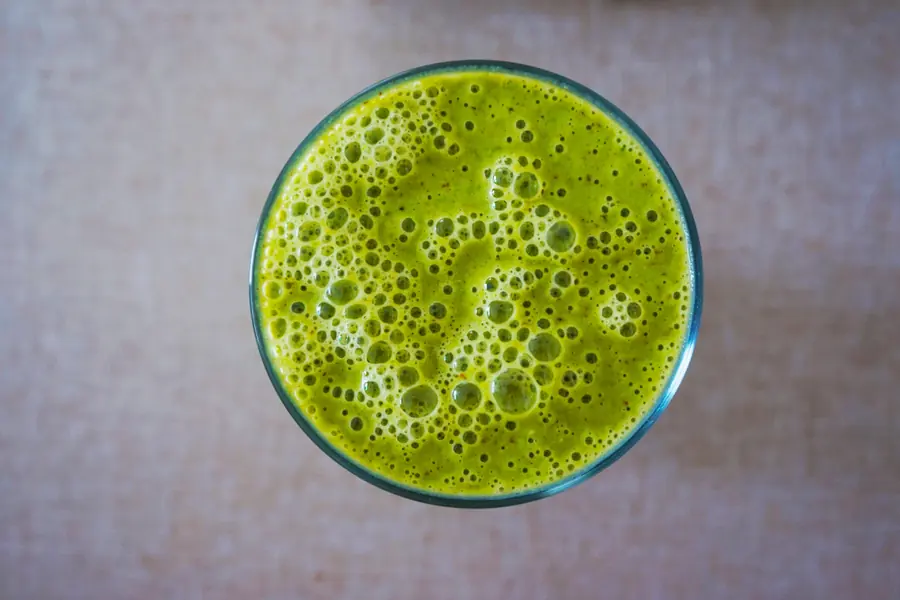
| Foamy on top | Blending at high speed for a long time | Let it sit for a minute, or stir the foam back in |
About the color: Greens mixed with red or purple berries often turn brownish. It tastes fine, but if you want a vibrant green smoothie, stick with yellow and green fruits. If you want to hide the green completely, go the other way and use plenty of dark berries.
Prep green smoothies ahead of time
- Freezer packs: Put the greens, fruit and extras for one smoothie in a freezer bag. In the morning, add liquid to the blender and tip the pack in on top.
- Freeze your greens: Spinach and kale freeze well for smoothies. Frozen greens also make smoothies colder and thicker.
- Drink it fresh: Blended green smoothies can separate and lose some color over time. Store any leftovers in a sealed jar in the fridge, shake well, and drink it the same day.
A note on nutrition
Leafy greens are rich in vitamins, minerals and fiber, which is why green smoothies are so popular. For detailed nutrition information on specific ingredients, the free USDA FoodData Central database is a reliable source. The Nutrition.gov site also has practical guidance on including more vegetables in your diet.
If you take medication that interacts with vitamin K (such as some blood thinners), have kidney problems, or have other health conditions, talk to your doctor or a registered dietitian before significantly increasing leafy greens.
Handy tools
Frequently asked questions
How do I make a green smoothie taste good?
Use about 60% fruit to 40% greens, start with mild baby spinach, add sweet fruits like mango or pineapple, a squeeze of lemon or lime, and something creamy like yogurt or avocado. Blend the greens with the liquid first so there are no leafy bits.
What is the mildest green for smoothies?
Baby spinach is the mildest and the best for beginners. Most people can’t taste a handful of it in a fruity smoothie. Romaine lettuce and cucumber are also very mild.
Why is my green smoothie bitter?
Usually because there are too many greens, the greens are strong (like mature kale or dandelion), or there’s not enough sweet fruit and acid to balance them. Use milder greens, add mango or pineapple, and squeeze in some lemon or lime.
Can I use frozen spinach in a smoothie?
Yes. Frozen spinach works well, makes smoothies colder and thicker, and is convenient to keep on hand. Start with a smaller amount than fresh, as frozen spinach is more compact.
How do I stop my green smoothie from being gritty or stringy?
Blend the greens with the liquid first for 30–60 seconds until completely smooth, remove tough stems, then add the fruit. A more powerful blender also helps with fibrous greens like kale.
The bottom line
A green smoothie that tastes like grass is almost always a recipe problem, not a greens problem. Start with baby spinach, use about 60% fruit, add citrus and something creamy, and blend the greens first. Once you’ve got the basics, experiment with other greens and flavors.
Keep your blender fresh between smoothies with our 60-second cleaning method.

We research blenders so you don't have to: we compare specs, warranties and thousands of owner reviews, and write practical guides for getting more out of the blender you already have.