How to Make a Creamy Smoothie Without Banana (9 Swaps That Work)
The best banana substitutes for thickness, creaminess and sweetness, plus 5 easy recipes
As an Amazon Associate I earn from qualifying purchases. If you buy through links on this page, we may earn a small commission at no extra cost to you. Details.
Bananas are in almost every smoothie recipe for a reason: they make smoothies thick, creamy and naturally sweet, and they cover up the taste of greens.
But plenty of people don’t like the taste of banana, find it overpowering, are watching their sugar, or simply don’t have one ripe. The good news is that you don’t need a banana to make a thick, creamy smoothie. You just need to replace what the banana was doing.
This guide explains exactly what a banana adds, the nine best substitutes (and what each one is best for), and five easy banana-free smoothie recipes.
What does a banana actually do in a smoothie?
A banana does three jobs at once:
- Thickness: Its soft, starchy flesh makes smoothies thick, especially when frozen.
- Creaminess: It gives a smooth, almost milkshake-like texture.
- Sweetness: A ripe banana is very sweet, so you don’t need added sugar.
No single ingredient does all three in exactly the same way, so the trick is to combine one or two substitutes: for example, frozen mango for sweetness and body, plus Greek yogurt for creaminess.
The 9 best banana substitutes for smoothies
| Substitute | Thickness | Creaminess | Sweetness | Best for |
|---|---|---|---|---|
| Frozen mango | ★★★ | ★★★ | ★★★ | Tropical and green smoothies |
| Avocado | ★★ | ★★★ | ☆ | Creamy green and chocolate smoothies |
| Greek yogurt | ★★ | ★★★ | ★ | Protein-rich, tangy smoothies |
| Frozen cauliflower rice | ★★★ | ★★ | ☆ | Low-sugar thick smoothies |
| Rolled oats | ★★★ | ★★ | ★ | Filling breakfast smoothies |
| Chia seeds | ★★★ | ★ | ☆ | Thickening and fiber |
| Nut butter | ★★ | ★★★ | ★ | Rich, filling smoothies |
| Silken tofu | ★★ | ★★★ | ☆ | Dairy-free protein |
| Frozen zucchini | ★★ | ★★ | ☆ | Low-sugar, mild green smoothies |
1. Frozen mango
The closest all-round substitute. Frozen mango chunks are sweet, thick and creamy, and blend smoothly. Use about ¾ to 1 cup of frozen mango in place of one banana.
Good to know: Mango has a stronger flavor than banana, so it works best in fruity and tropical smoothies. It’s also great for masking the taste of spinach.
2. Avocado
Avocado makes smoothies incredibly creamy, with healthy fats that keep you full. It has almost no sweetness, so pair it with a sweet fruit or a little honey or dates.
Use ¼ to ½ an avocado per smoothie. You can freeze avocado chunks so they add thickness too.
3. Greek yogurt
Greek yogurt adds creaminess, thickness and a good dose of protein, with a gentle tang. Plain yogurt keeps sugar low; flavored versions add sweetness.
Use ½ to ¾ cup. For a dairy-free version, use a thick coconut or soy yogurt.
4. Frozen cauliflower rice
This sounds strange, but it’s a popular trick. Frozen riced cauliflower adds thickness with almost no taste once blended with fruit, and it’s very low in sugar.
Use ½ cup frozen. Start small until you’re used to it, and blend well. A powerful blender helps.
5. Rolled oats
Oats make smoothies thick and filling, turning them into a proper breakfast. For the smoothest result, blend the oats with the liquid first for 20–30 seconds before adding everything else, or soak them for 10 minutes.
Use ¼ to ½ cup rolled or quick oats.
6. Chia seeds
Chia seeds absorb liquid and thicken smoothies, and they add fiber. They can make smoothies slightly gel-like if left to sit, so drink them fresh or embrace the pudding-like texture.
Use 1–2 tablespoons. Let the smoothie sit for 5 minutes for extra thickness.
7. Nut butter
Peanut, almond or cashew butter makes smoothies rich and creamy, and pairs perfectly with chocolate, berries or coffee. Use 1–2 tablespoons. You can even make your own nut butter in a blender.
8. Silken tofu
Silken tofu blends completely smooth and adds protein with no real flavor, which makes it a great dairy-free alternative to yogurt. Use ½ cup.
9. Frozen zucchini
Like cauliflower, frozen zucchini slices add body with very little flavor or sugar. Peel them first for a less green color. Use ½ cup frozen.
5 banana-free smoothie recipes
Each recipe makes one large or two small smoothies. Follow our smoothie layering order for the smoothest blend: liquid first, frozen ingredients last.
1. Mango Green Smoothie
- 1 cup milk or plant milk
- 1 handful spinach
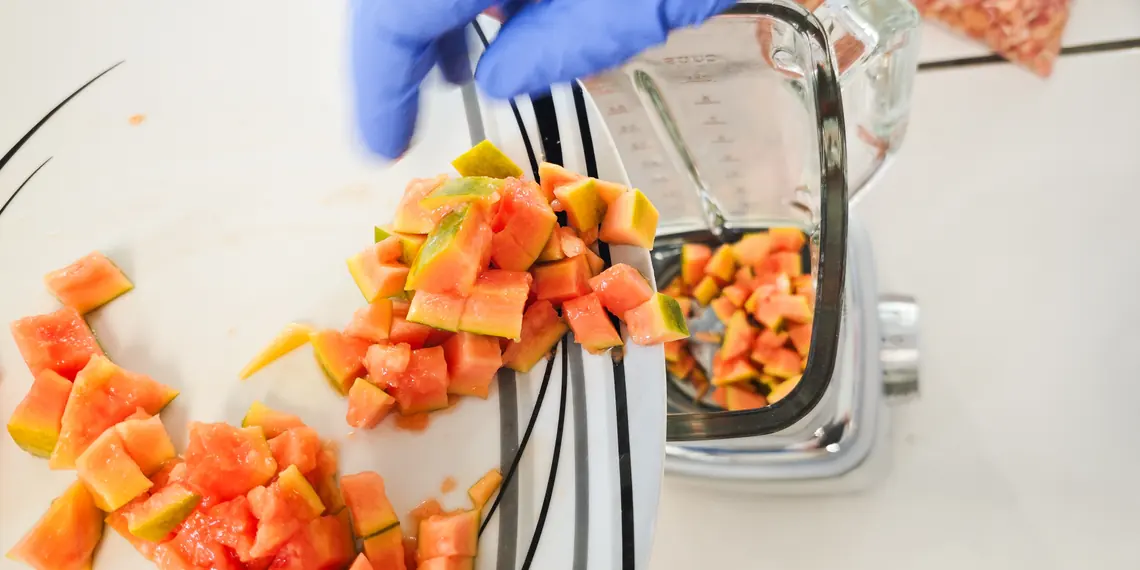
- 1 cup frozen mango
- ½ cup Greek yogurt
- Squeeze of lime (optional)
Blend the milk and spinach first until smooth, then add yogurt and mango. The mango hides the spinach completely.
2. Creamy Chocolate Avocado Smoothie
- 1 cup milk or plant milk
- 1 tablespoon cocoa powder
- 1 tablespoon nut butter
- ½ avocado
- 2 pitted dates (or 1–2 teaspoons honey or maple syrup)
- A handful of ice
Tastes like a chocolate milkshake. Soak the dates in hot water for 5 minutes first if your blender isn’t very powerful.
3. Berry Oat Breakfast Smoothie
- 1 cup milk or plant milk
- ⅓ cup rolled oats
- ½ cup Greek yogurt
- 1 cup frozen mixed berries
- 1 teaspoon honey (optional)
Blend the milk and oats first for 30 seconds, then add the rest.
4. Strawberry “Cheesecake” Smoothie
- ¾ cup milk
- ½ cup Greek yogurt or silken tofu
- 1 cup frozen strawberries
- ¼ cup frozen cauliflower rice
- ½ teaspoon vanilla extract
- 1 crushed graham cracker to top (optional)
Thick, creamy and lower in sugar than most fruit smoothies.
5. Tropical Coconut Smoothie
- 1 cup coconut milk (drinking kind)
- 1 cup frozen pineapple
- ½ cup frozen mango
- 1 tablespoon chia seeds
- Squeeze of lime
Let it sit for a few minutes after blending so the chia thickens it.
Tips for thick, creamy smoothies without banana
- Use frozen fruit instead of ice. Ice waters smoothies down as it melts. Frozen fruit thickens them.
- Go easy on liquid. Start with less liquid than you think, and add more a splash at a time.
- Blend thick ingredients first. Oats, dates and greens blend smoother when they go in first with the liquid.
- Freeze your own fruit. Buy fruit in season, chop it, and freeze it flat on a tray before bagging it.
- Use the tamper for very thick smoothies, if your blender has one. If your blender stalls, see why your blender won’t blend.
Common mistakes (and how to avoid them)
Using ice instead of frozen fruit. Ice makes a smoothie cold, but it melts into water and dilutes the flavor, especially without banana to hold things together. Swap ice for frozen fruit, frozen cauliflower or frozen yogurt cubes.
Adding all the liquid at once. Without banana, it’s easy to end up with a thin, juice-like smoothie. Start with about ¾ cup of liquid and add more a splash at a time.
Using an unsweetened base with no sweet fruit. Avocado, yogurt, oats, tofu and vegetables aren’t sweet on their own. Pair them with mango, pineapple, ripe berries or a date or two, or the smoothie can taste flat.
Not blending long enough. Oats, chia seeds, dates and greens need more blending time than soft banana. Blend them with the liquid first, then add the frozen ingredients.
Overdoing the thickeners. Too much chia or oats makes a smoothie gluey, especially if it sits. Start with the lower amounts in this guide.
Forgetting balance. A little acidity (lemon or lime juice) and a pinch of salt or cinnamon can make fruit taste sweeter and brighter, which helps when you’ve removed the banana’s sweetness.
Frozen mango for sweetness, yogurt or avocado for creaminess: together they replace a banana almost perfectly.
A quick note on nutrition
Every substitute changes the nutrition of your smoothie. Mango and dates add natural sugar, avocado and nut butter add fat and calories, and yogurt, tofu and oats add protein and fiber. If you’re tracking nutrients, USDA FoodData Central is a free database with detailed nutrition information for most ingredients.
If you have a medical condition, allergies or specific dietary needs, check with a doctor or registered dietitian. The Nutrition.gov site from the USDA also has reliable general guidance.
Handy tools for banana-free smoothies
Not sure which blender suits your smoothie habit? See our guide to personal, full-size and high-performance blenders.
Frequently asked questions
What can I use instead of banana in a smoothie?
Frozen mango is the closest all-round substitute because it’s sweet, thick and creamy. Avocado, Greek yogurt, oats, chia seeds, nut butter, silken tofu, frozen cauliflower rice and frozen zucchini also work. Combining two, such as mango and yogurt, gives the best result.
How do I make a smoothie thick without banana?
Use frozen fruit instead of ice, add a thickener like oats, chia seeds, Greek yogurt or frozen cauliflower rice, and use less liquid. Start with a small amount of liquid and add more only if needed.
How do I make a smoothie sweet without banana?
Use sweet fruits like mango, pineapple, ripe berries or dates. A little honey or maple syrup also works. Vanilla extract and cinnamon can make a smoothie taste sweeter without adding sugar.
Can I use avocado instead of banana in a smoothie?
Yes. Avocado makes smoothies very creamy, but it isn’t sweet, so pair it with a sweet fruit, dates or a little honey. About a quarter to half an avocado per smoothie is plenty.
Will frozen cauliflower make my smoothie taste like cauliflower?
Not in small amounts. About half a cup of frozen riced cauliflower blended with fruit is almost undetectable, and it adds thickness with very little sugar.
The bottom line
You don’t need a banana for a thick, creamy smoothie. Frozen mango is the best all-round swap, while avocado, Greek yogurt, oats and chia seeds each bring their own strengths. Combine one sweet ingredient with one creamy ingredient, use frozen fruit instead of ice, and go easy on the liquid.
Keep your blender in top shape for all those smoothies with our 60-second cleaning method.

We research blenders so you don't have to: we compare specs, warranties and thousands of owner reviews, and write practical guides for getting more out of the blender you already have.